Human Space

What Is "Human Space"?

From the space inside clothing to the space station. We define and study "human space" as any scale of space designed for people to occupy comfortably.
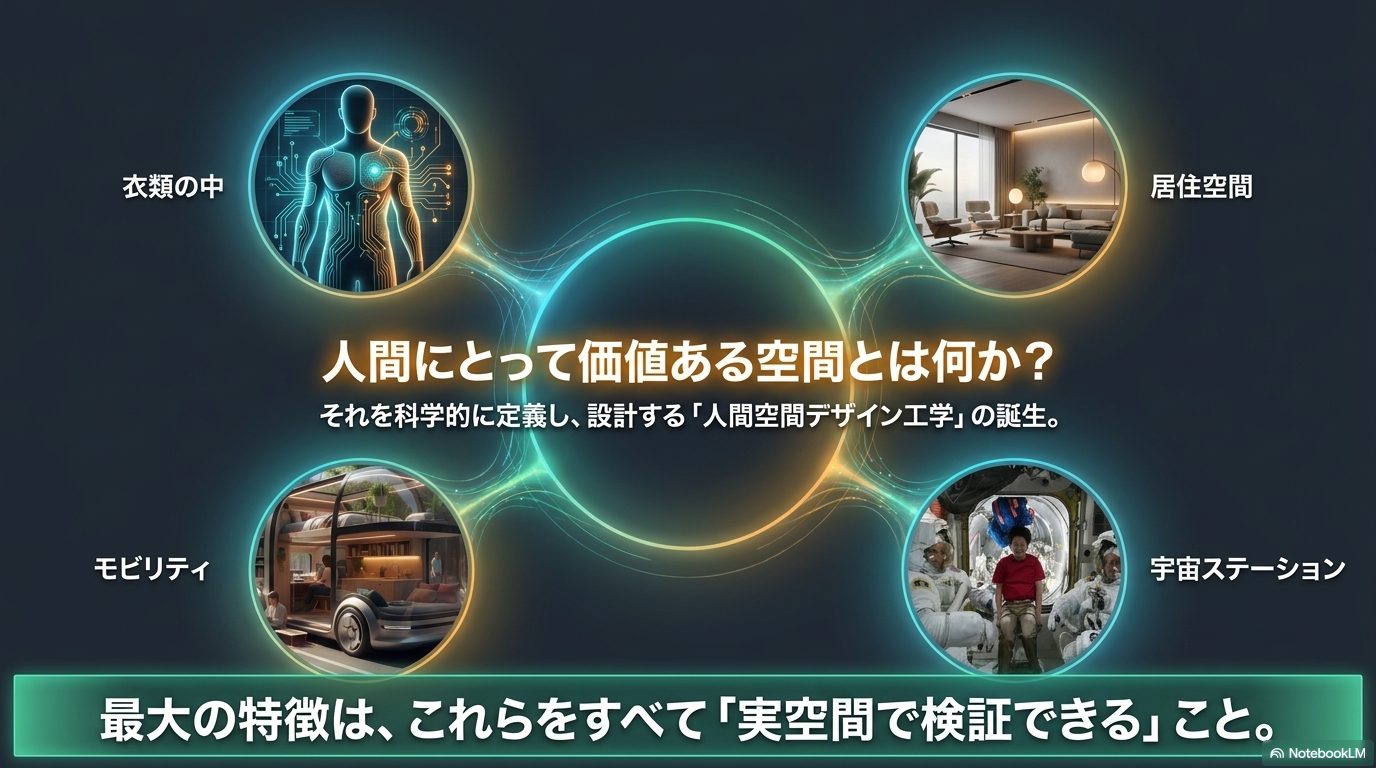
Inside clothing, living space, mobility, and the space station

Four Scales of Space

Inside clothing, living space, mobility, and the space station. Though the scales differ, all are "human spaces" in which people seek comfort.
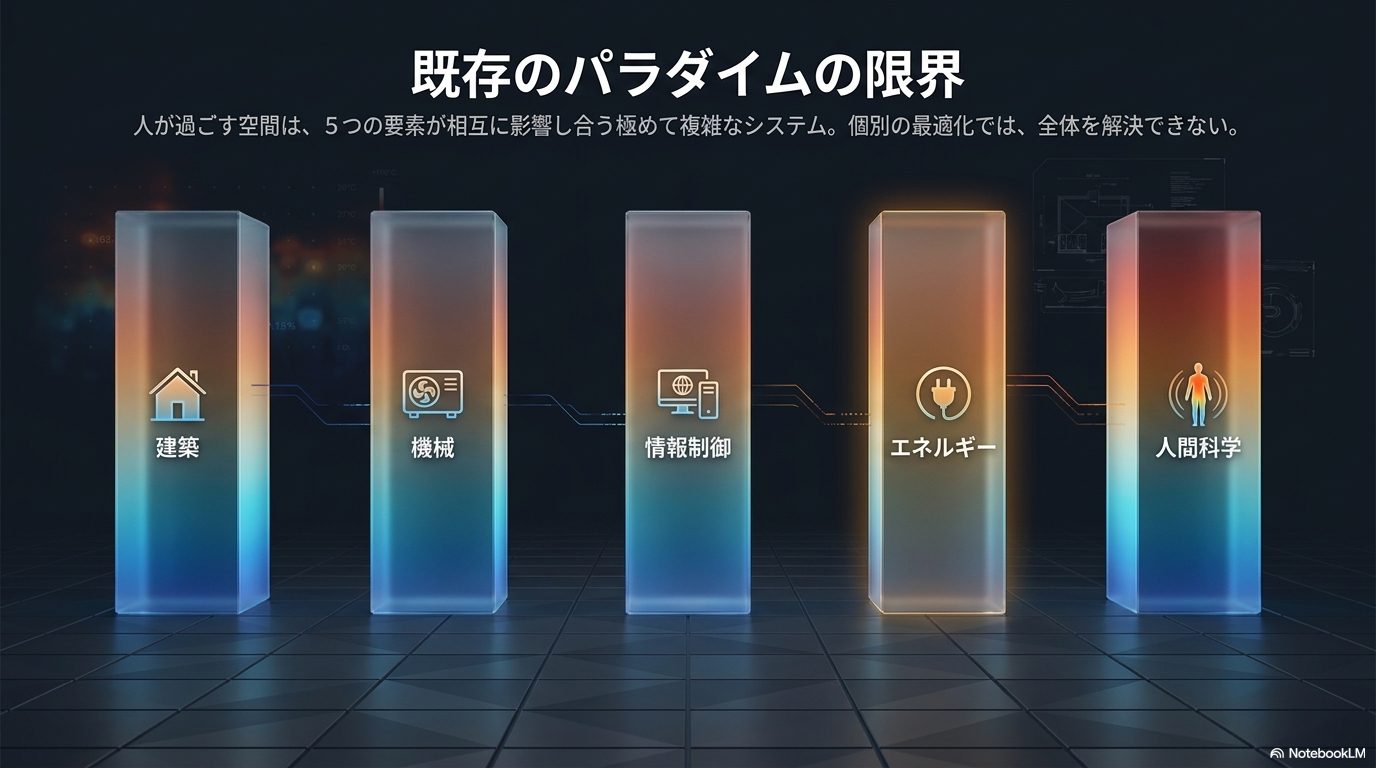
The five elements: architecture, mechanical engineering, information and control, energy, and human science

The Five Elements That Make Space Possible

Architecture, mechanical engineering, information and control, energy, and human science. Human space is realized only where these five academic fields overlap.
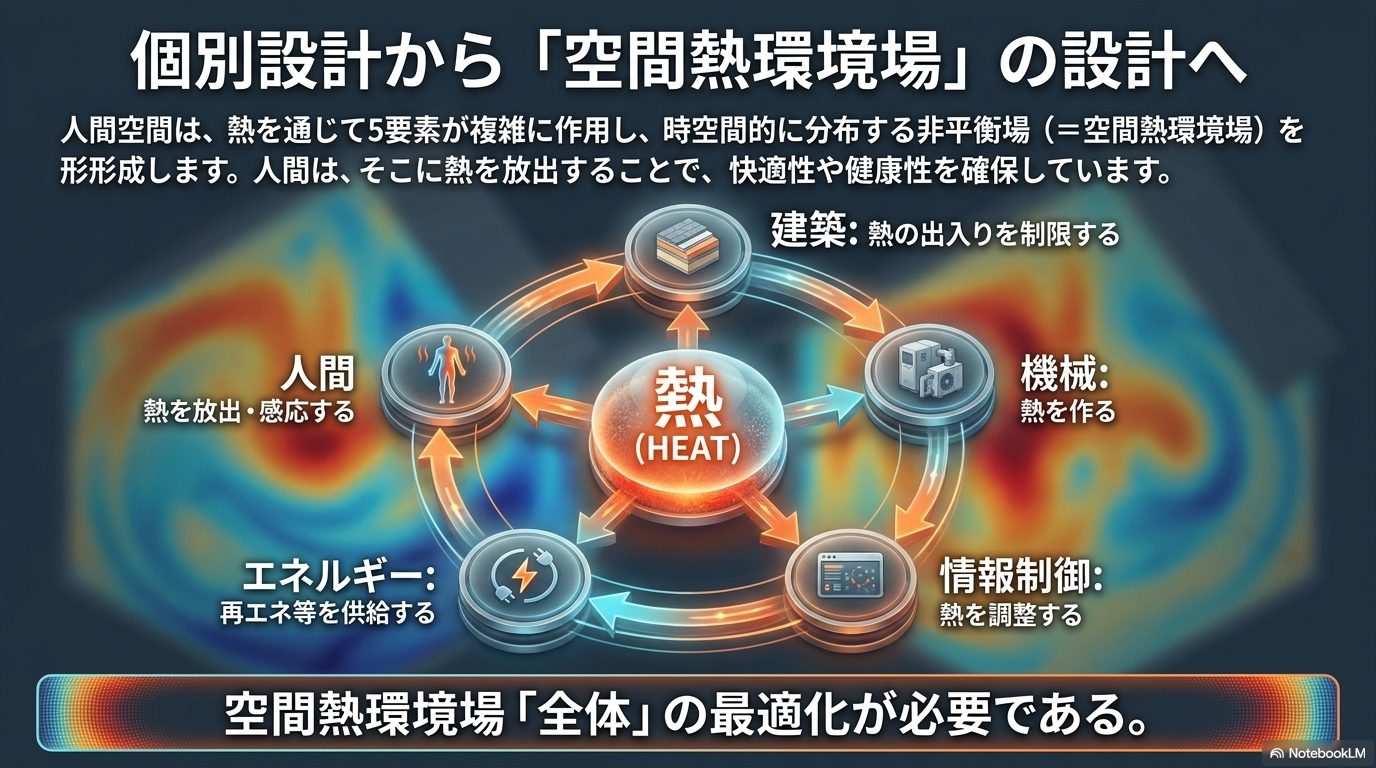
The concept of the spatial thermal environment field

The Concept of the Spatial Thermal Environment Field

We treat the flow of heat surrounding a person as a single unified "field," forming the foundation for space design that achieves both comfort and energy efficiency.

Research Themes (Card-Based)

I. "Human Space Design Engineering" — Integrating the Whole Space (Macro)

We connect five academic fields that have traditionally been treated separately through the common language of "heat," creating new value in space design. Each theme is organized consistently as "Purpose → Method → What Students Do → Deliverables."
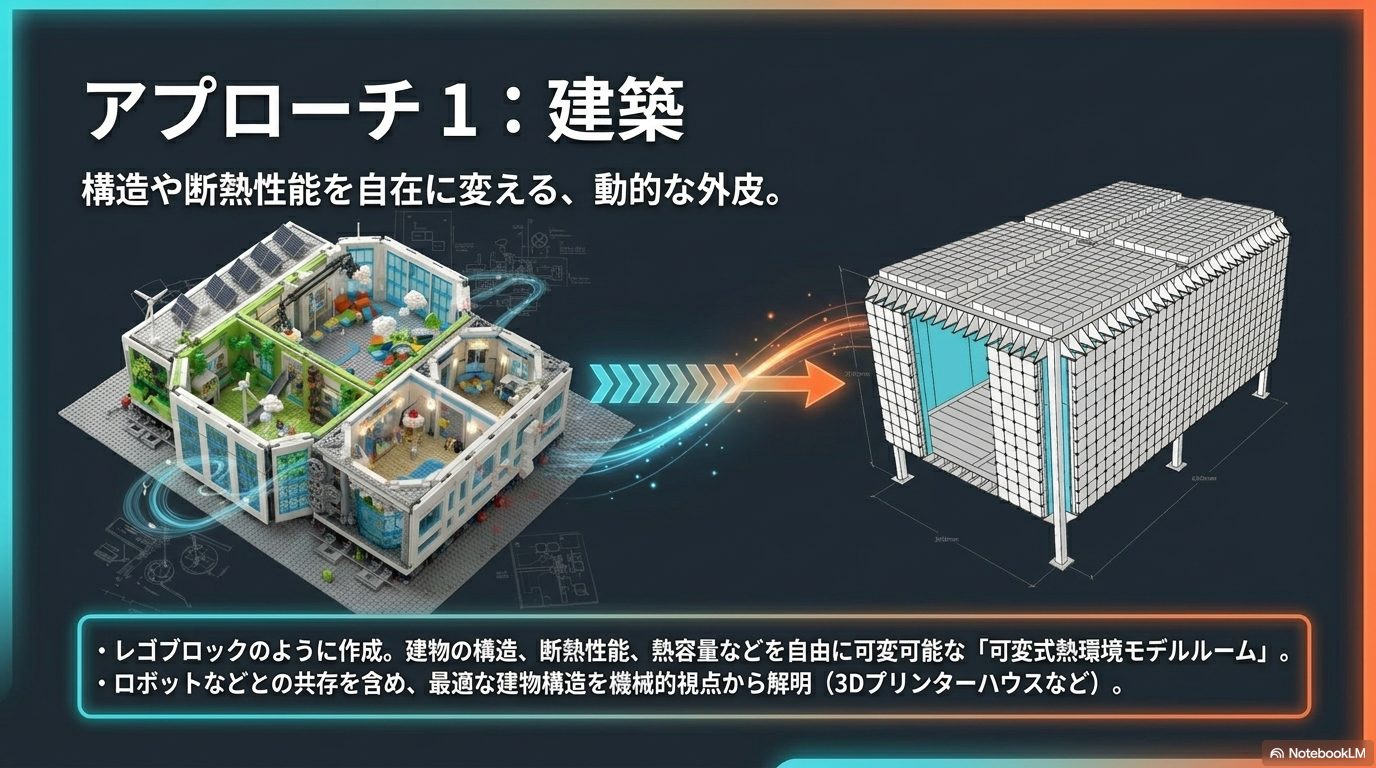
Architecture approach
1.

Architecture Approach

PurposeTo design a dynamic "vessel" that accounts for heat gain/loss and thermal storage characteristics, achieving a spatial configuration in harmony with its environment.
MethodUsing a variable thermal environment model room, we vary and verify building structure, insulation performance, and thermal capacity like Lego blocks. With an eye toward coexistence with robots such as 3D-printed houses, we elucidate the optimal building structure from a mechanical engineering perspective.
What Students DoMeasure the thermal environment while varying the model room's structural parameters, and compare and verify the results against simulation.
DeliverablesDesign guidelines showing the relationship between building structure and thermal environment performance, experimental datasets, and conference presentations/papers.
Mechanical engineering approach
2.

Mechanical Engineering Approach

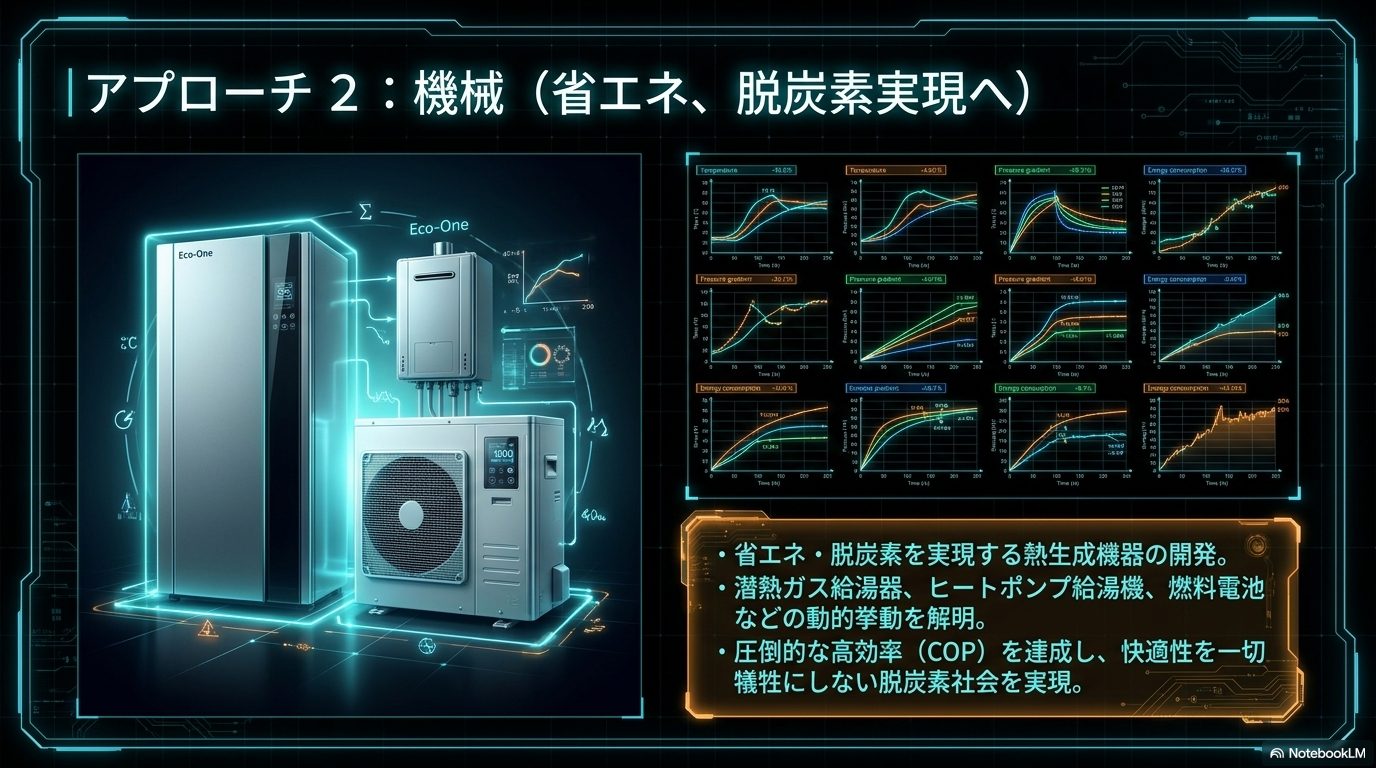
PurposeTo develop innovative air-conditioning and heat-source systems (the "heart" of the space) that generate the necessary cooling and heating with high efficiency.
MethodWe elucidate the dynamic behavior of latent-heat-recovery gas water heaters, heat pump water heaters, fuel cells, and other equipment, and evaluate and optimize the performance of heat-generating devices to achieve energy savings and decarbonization.
What Students DoMeasure actual equipment using emulator-type load test rigs and comprehensive water-heater evaluation test rigs, and verify control and design parameters for higher efficiency.
DeliverablesDesign and control methods for heat-source systems achieving high efficiency (high COP), demonstration data, papers, and patents.
Information and control approach
3.

Information and Control Approach

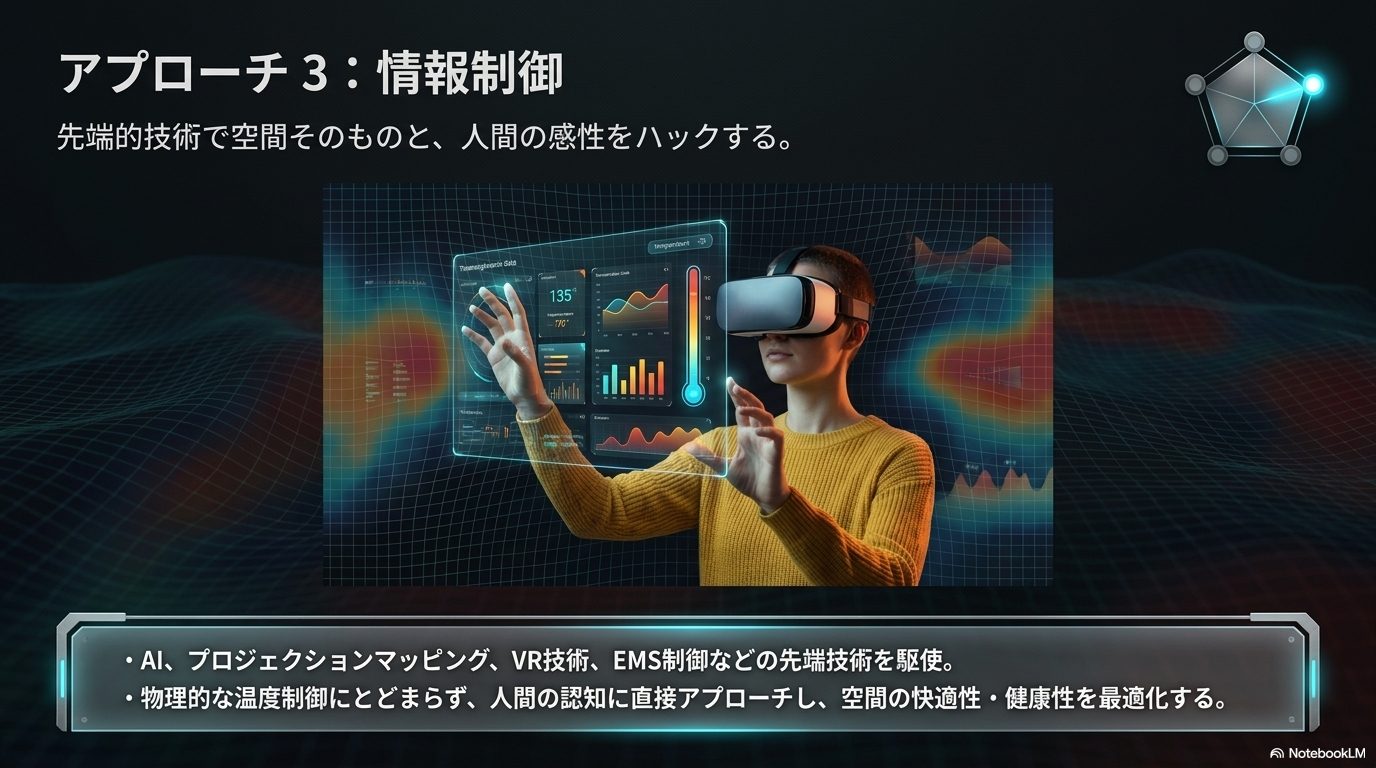
PurposeTo achieve autonomous control (the "brain" of the space) that optimizes the space in real time by making full use of sensing, mathematical modeling, and AI.
MethodWe leverage cutting-edge technologies such as AI, projection mapping, VR, and EMS. Rather than stopping at physical temperature control, we approach human cognition directly, and reproduce real spaces in a virtual space using digital twin technology.
What Students DoCollect and analyze sensor data, implement control algorithms, and conduct verification experiments in VR/digital-twin environments.
DeliverablesControl algorithms that achieve both spatial comfort and energy savings, digital twin models, and conference presentations.
Energy approach
4.

Energy Approach

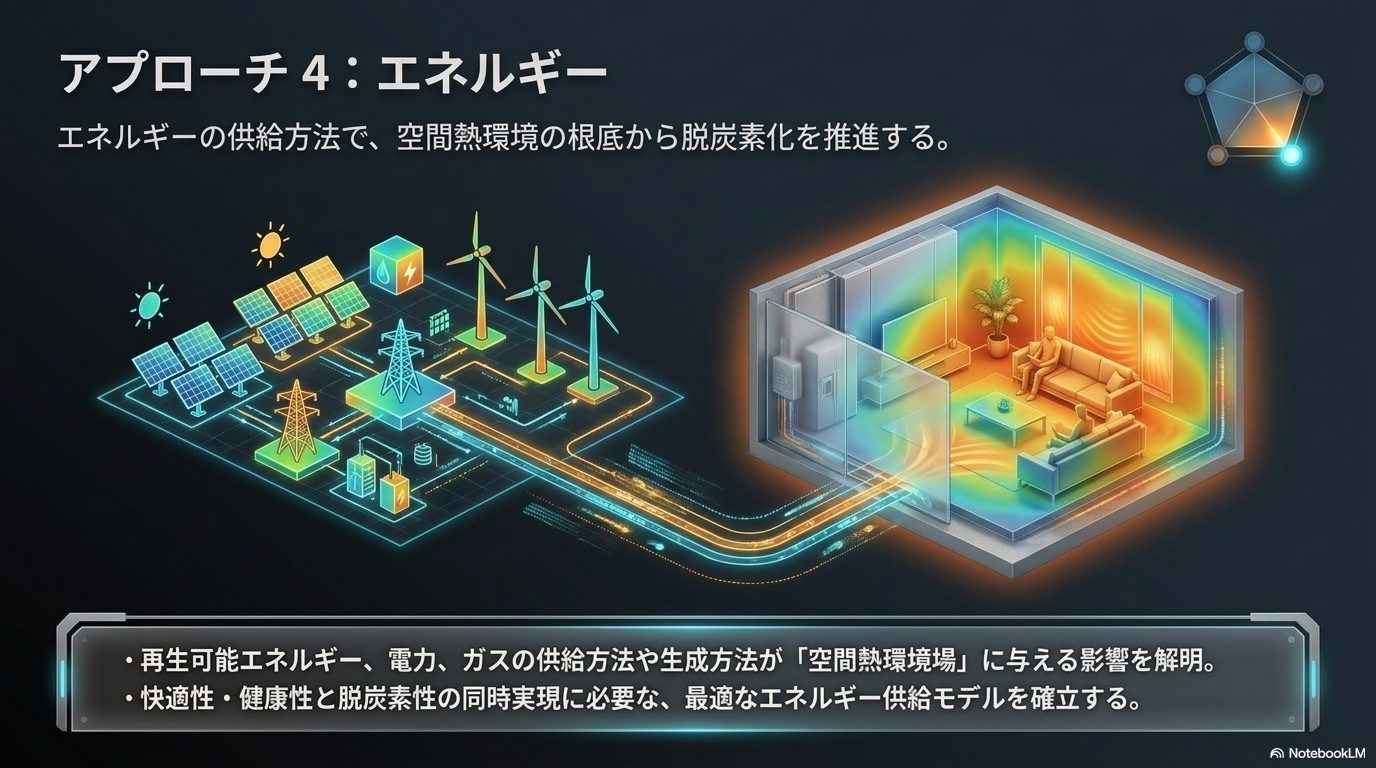
PurposeTo build an optimal supply model that responds to the variability of renewable energy and fundamentally supports the design conditions of a space.
MethodWe elucidate how renewable energy sources such as solar and wind power, and the methods of supplying and generating electricity and gas, affect the "spatial thermal environment field." We research next-generation energy networks based on hydrogen energy systems and smart heat pumps.
What Students DoRun energy supply-and-demand simulations, and design and evaluate systems that combine hydrogen, electricity, and gas.
DeliverablesEnergy supply models that contribute to a decarbonized society, system design proposals, papers, and conference presentations.
Human science approach
5.

Human Science Approach

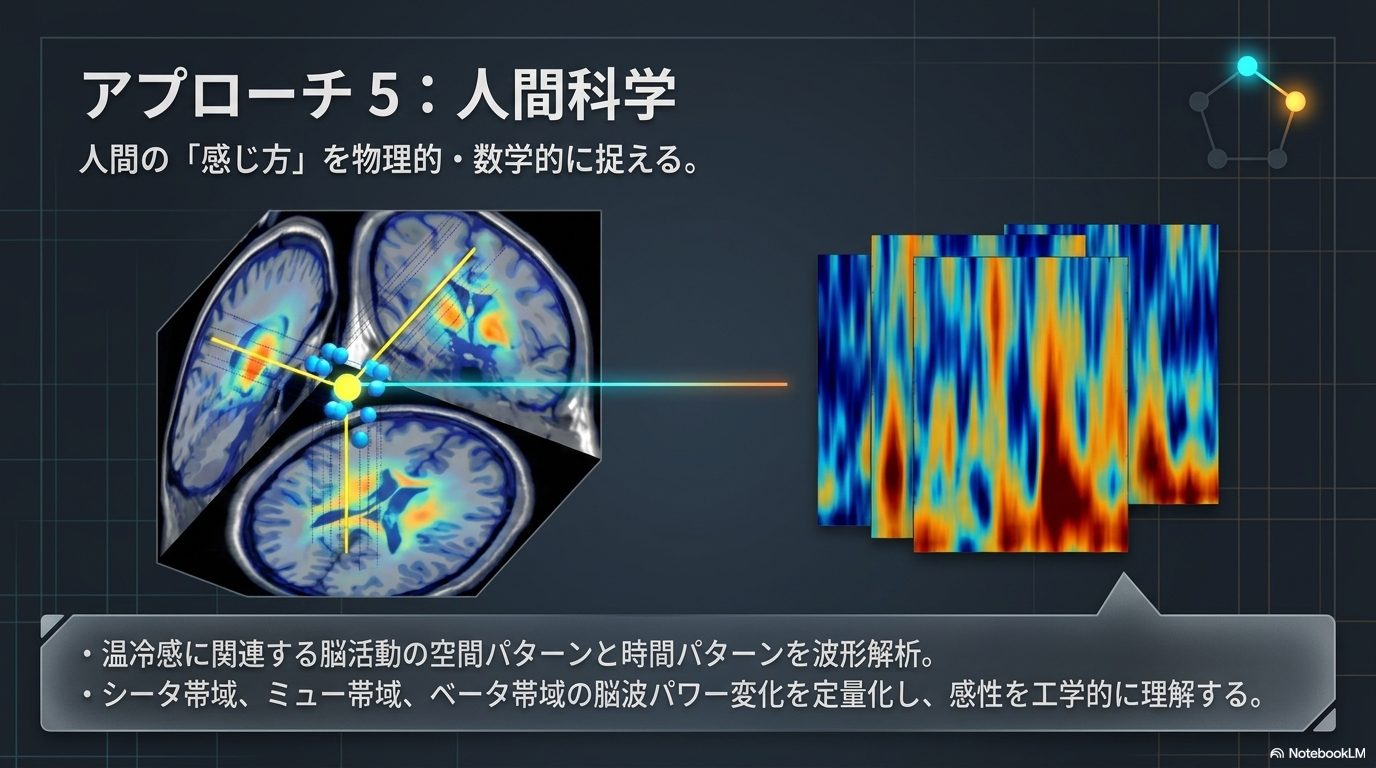
PurposeTo quantify, in engineering terms, the physiological and psychological "sense of feeling" — thermal sensation and comfort — that people experience, establishing an evaluation axis for space design.
MethodWe use EEG measurement to perform waveform analysis of the spatial and temporal patterns of brain activity related to thermal sensation, quantifying power changes in the theta, mu, and beta bands.
What Students DoPlan and conduct human-subject experiments, measure and analyze EEG and other physiological data, and build comfort evaluation models.
DeliverablesEvaluation indices and models that quantify human sensation, and experimental papers.
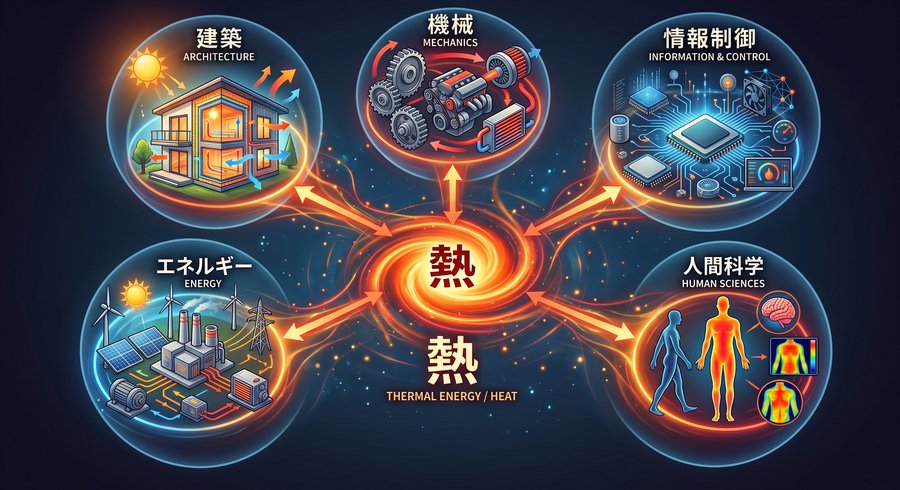
Conceptual diagram showing architecture, mechanical engineering, information and control, energy, and human science connected through 'heat'
Breakthrough Key

The Key to the Breakthrough Connecting Every Field Is "Heat"

Architecture, mechanical engineering, information and control, energy, and human science — these five fields, seemingly disparate at first glance, are all connected through the common language of "heat." Realizing macro-scale space design engineering is impossible without micro-scale fundamental research that unravels the extremes of heat and fluid behavior.

Fundamental Research (Micro)

II. Fundamental Research That Underpins Human Space Design

Envisioning a grand system alone cannot bring it into society. We are also vigorously pursuing fundamental research that confronts the extremes of heat and fluid behavior, and developing the elemental technologies that will command the energy of the future.
Hydrogen energy system

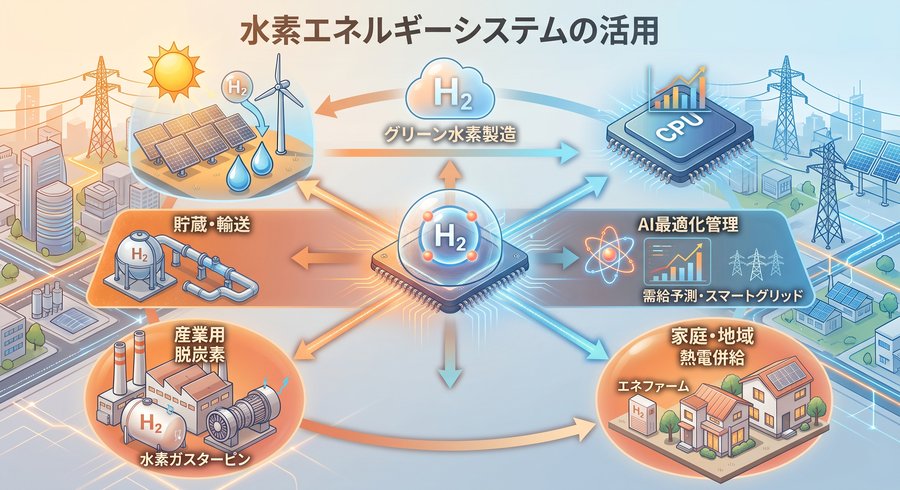
1.Utilizing Hydrogen Energy Systems

We build next-generation systems that make full use of both heat and electricity by harnessing "hydrogen," the trump card for a decarbonized society.
Smart heat pump

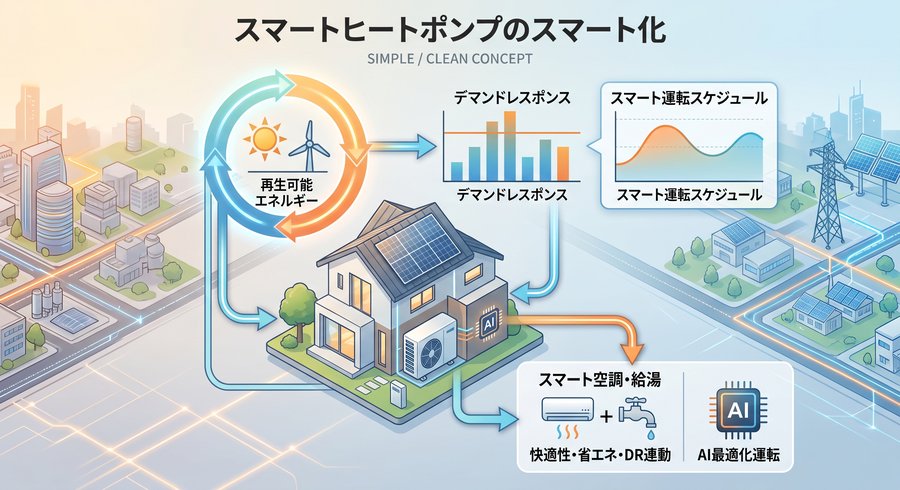
2.Making Heat Pumps Smarter

We build intelligent heat pump systems that operate in coordination with society's power supply-and-demand balance (demand response), delivering energy savings while maintaining comfort.
Next-generation heat exchanger

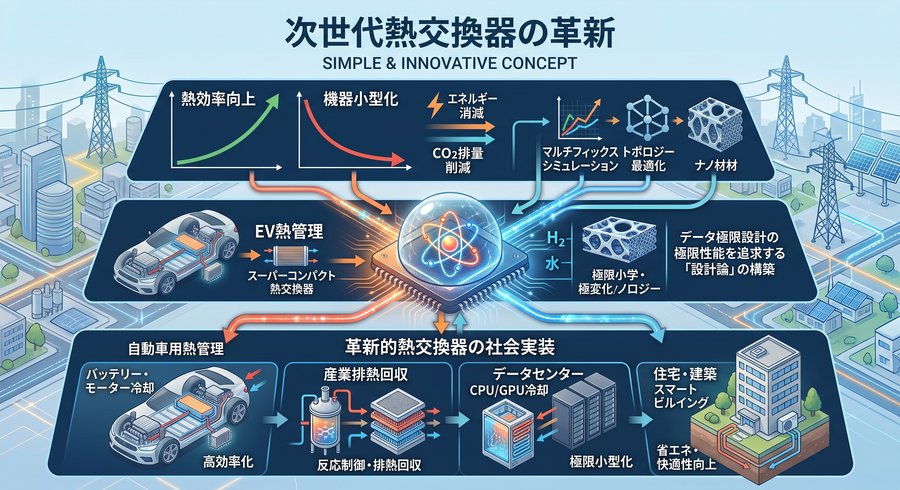
3.Innovating Next-Generation Heat Exchangers

We build design theory that pushes the heat exchanger — the component that governs the performance of every thermal device — to the limits of efficiency and compactness.
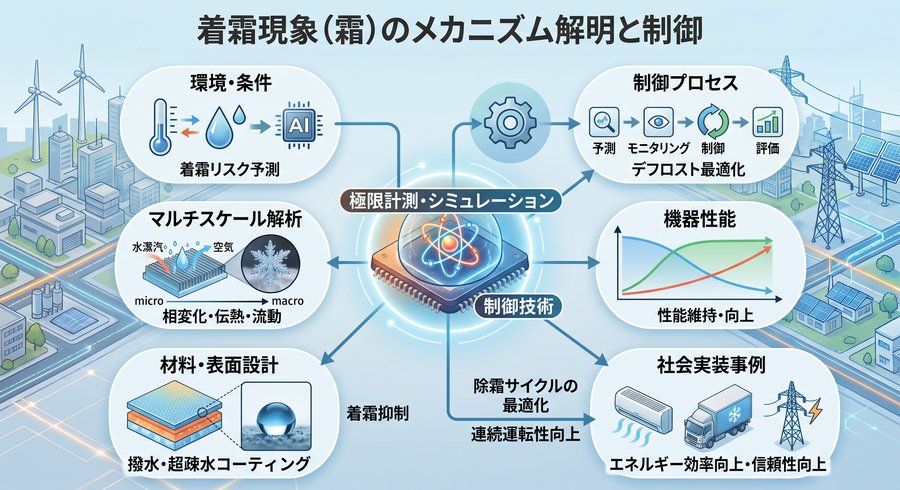
Mechanism of frost formation

4.Elucidating and Controlling the Frost Formation Phenomenon

We elucidate the complex phase-change mechanisms of "frost," which significantly degrades equipment performance in cold conditions, in order to predict and suppress frost formation.
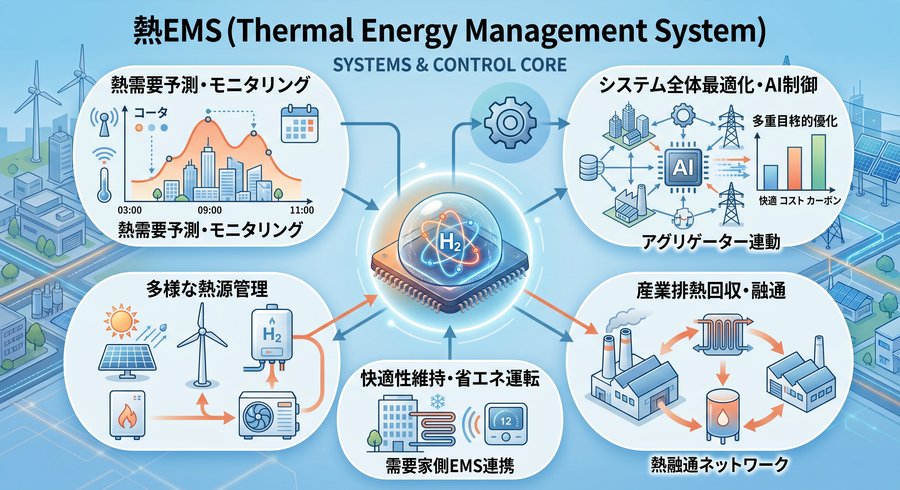
Thermal EMS

5.Thermal Energy Management System (Thermal EMS)

We manage the supply, use, and storage of heat in an integrated manner to optimize energy use. Based on demand forecasts and the variability of renewable energy, we coordinate the control of multiple devices. We achieve energy savings and decarbonization while maintaining comfort.
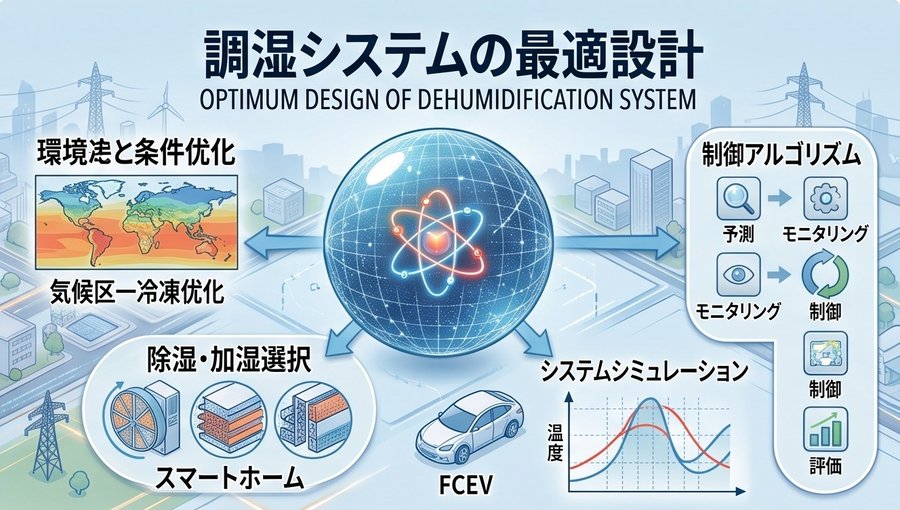
Humidity control system

6.Optimal Design of Humidity Control Systems

We control not only temperature but also humidity appropriately, realizing a comfortable and healthy indoor environment. By integrating dehumidification/humidification equipment, ventilation, and air conditioning, we clarify the optimal system configuration. We build design methods that achieve high humidity-control performance while minimizing energy consumption.
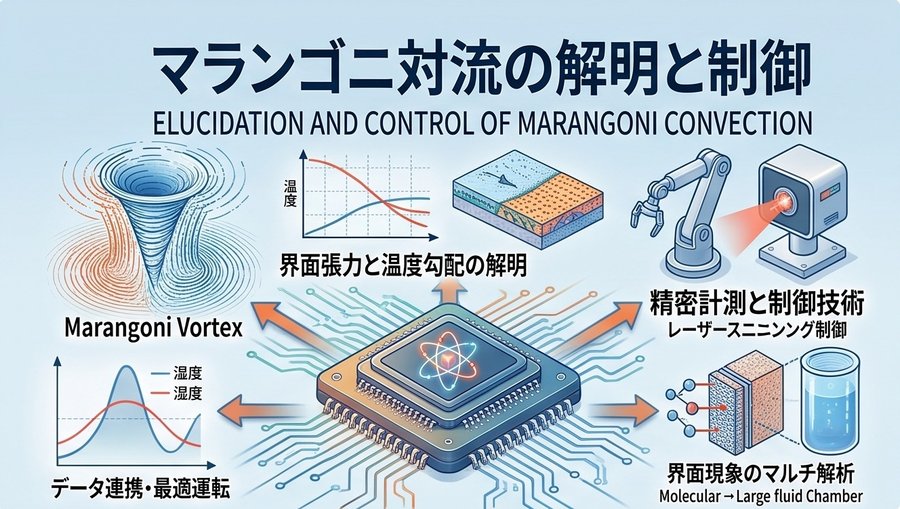
Marangoni convection

7.Elucidating Marangoni Convection

Changes in surface tension caused by differences in temperature or concentration give rise to fluid convection. Through experiments and numerical analysis, we elucidate the mechanisms of complex flow and heat/mass transfer. We build fundamental knowledge that leads to higher performance in refrigeration and air-conditioning equipment.
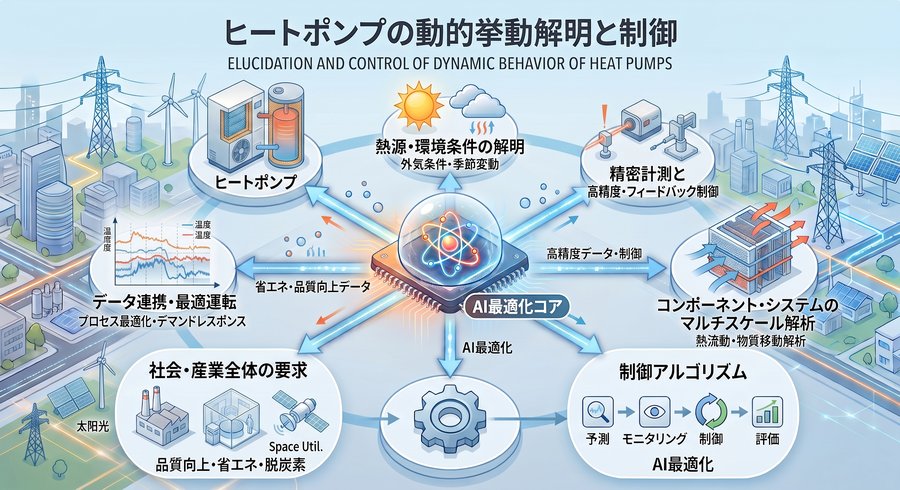
Dynamic behavior of heat pumps

8.Elucidating the Dynamic Behavior of Heat Pumps

Heat pump performance changes moment by moment with startup, shutdown, and load fluctuations. Through experiments and model analysis, we clarify the transient behavior of the refrigerant, compressor, and heat exchanger. We build design guidelines that lead to higher efficiency and more advanced control under actual operating conditions.